
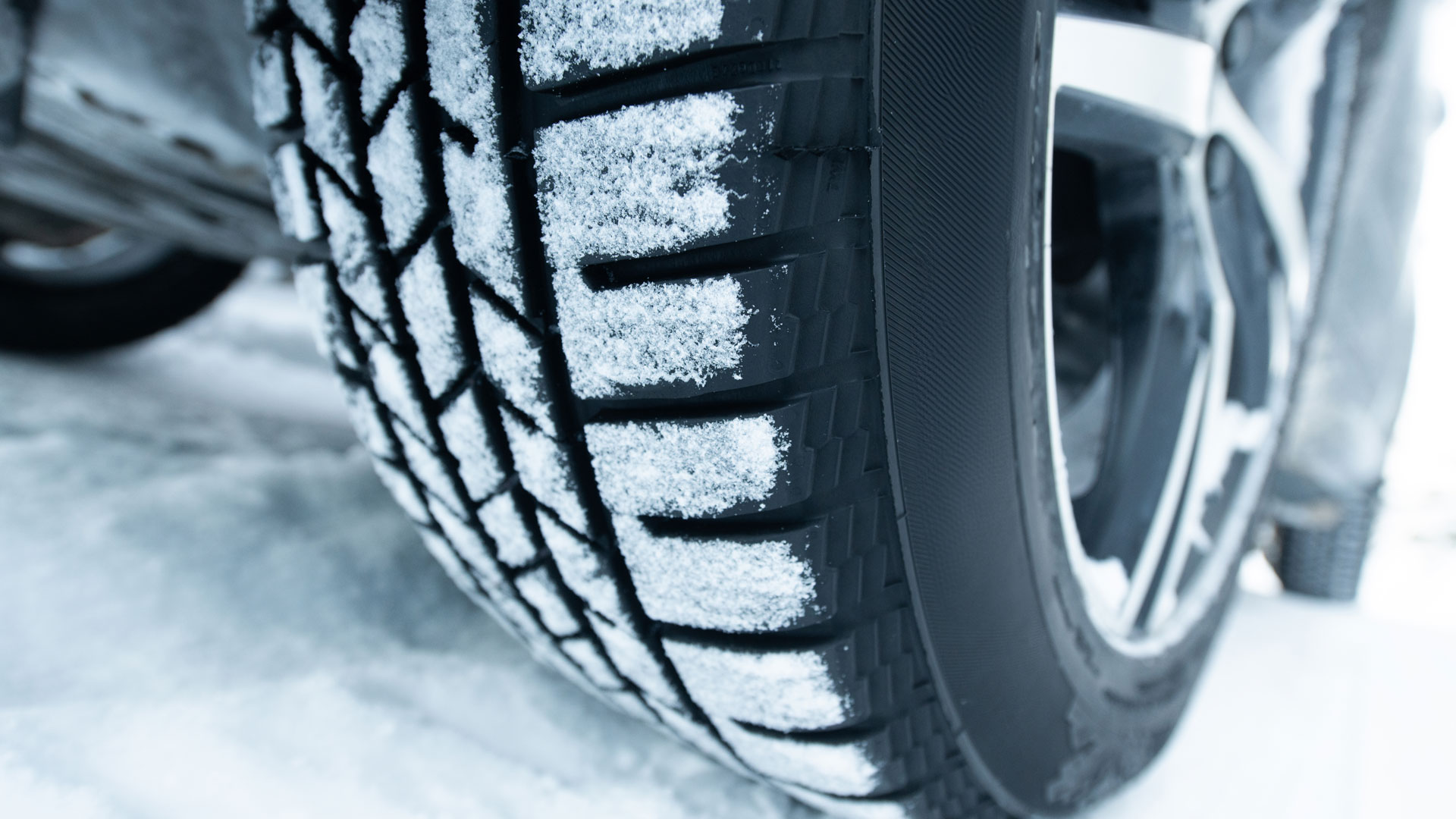
The general rule is to switch to winter tires once daytime temperatures consistently drop below 7°C. In Lethbridge, that usually lands somewhere in October, though a cold snap can push it earlier some years. Waiting for the first snowfall is too late, since the tires themselves start losing grip well before any snow shows up.
Here's what's actually behind that 7°C number, and how to time your swap.
Why 7°C Is the Cutoff, Not 0°C
It comes down to rubber, not weather. All-season tires use a rubber compound that stiffens as temperatures drop. Once you're below 7°C, that compound starts to harden enough that it loses grip on the road, even on dry pavement. Winter tires use a softer compound built to stay flexible in the cold, which is what gives them better traction in freezing temperatures, regardless of whether there's snow on the ground.
That's why the swap is a temperature decision, not a snow decision. You can have a bone-dry road in October and still be less safe on all-seasons than on winters, simply because the rubber has stiffened up.
What This Looks Like in Lethbridge
Southern Alberta weather doesn't always cooperate with a fixed calendar date. Some years hover near 7°C well into October, other years drop hard and fast with an early cold snap. A few things to watch for locally:
- Overnight lows matter as much as daytime highs. Once your morning drive starts dipping below 7°C regularly, it's time.
- Chinooks can complicate things. A warm stretch in November doesn't mean you should switch back. Alberta's winter weather swings too unpredictably to treat one mild week as the season being over.
- Wind and windchill don't factor into the 7°C rule. It's about actual air temperature and how it affects the tire compound, not how cold it feels.
A practical approach is to book your swap in early October before the shop calendar fills up, rather than waiting for the first cold morning when everyone else has the same idea.
What Happens If You Wait Too Long
Beyond the grip issue, waiting creates a few other problems:
- Booking gets tight. Once temperatures drop, tire shops across Lethbridge get busy fast, and same-week appointments become harder to find.
- You lose the margin for a cold snap. Alberta weather can shift in a matter of days. Waiting until it's already cold means driving on the wrong tires during exactly the conditions winter tires are built for.
- Braking distance increases. Cold, stiff rubber takes longer to stop, particularly on ice or frost that can show up long before any real snowfall.
When to Switch Back in the Spring
The same 7°C logic applies in reverse. Once daytime temperatures are consistently staying above 7°C, usually April in this region, it's time to swap back to all-seasons. Running winter tires through the summer wears them out faster and doesn't offer any benefit once the cold-weather grip advantage disappears.
Book Your Winter Tire Swap in Lethbridge
Mo-Tires handles winter tire swaps, storage, and inspections, and we'd rather get you booked in early October than have you calling during the first cold snap when everyone else is too. If you're not sure whether your current tires still have enough tread for another winter, bring them in and we'll check before you commit to a swap.
Ready to book your swap? Get ahead of the rush and lock in your appointment before the temperature drops.