
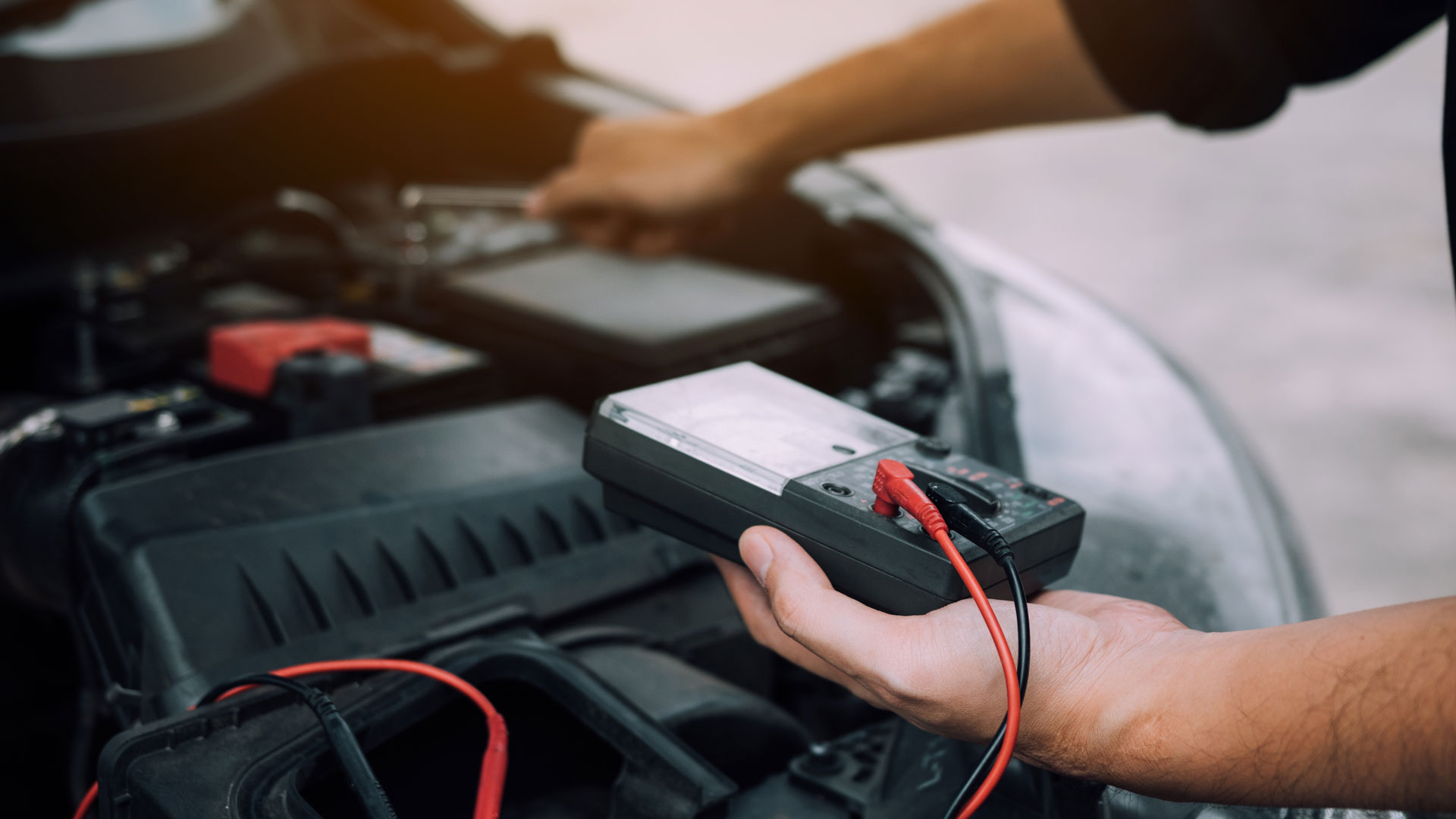
Cold weather doesn't kill car batteries on its own, it exposes weakness that was already there. A battery that's been quietly losing capacity all year can start your car fine in September and refuse to turn over in November, once temperatures drop hard enough. The fix isn't complicated: get your battery tested before the cold snap, not during it.
Here's what's actually happening inside your battery when the temperature drops, and how a test catches problems before you're stranded.
Why Cold Weather Is So Hard on Batteries
A car battery produces power through a chemical reaction, and that reaction slows down as temperatures drop. A battery that's at 100% strength in the summer might only be able to deliver around 50% of its cranking power once it hits -18°C. If your battery was already sitting at 80% capacity from normal wear, that's not much power left to work with on a cold morning.
At the same time, cold engine oil thickens, which means your engine needs more cranking power to turn over, right when your battery has the least power to give. It's a double hit: the battery is weaker, and the job it needs to do just got harder.
This is why batteries that seem completely fine all summer and fall can suddenly fail the moment a real cold snap hits. The battery was already declining, the cold just exposed it.
Do Block Heaters Prevent This?
Block heaters help, but they solve a different half of the problem. A block heater keeps your engine oil and coolant warm overnight, which means the engine turns over more easily and your battery doesn't have to work as hard to start it. That's a real benefit, especially on the coldest mornings.
What a block heater doesn't do is fix a weak battery. It reduces the demand on the battery, it doesn't add any power back into a battery that's already declining. That's why plugging in overnight and still ending up with a dead battery is such a common experience in Alberta winters. The block heater did its job, the battery just didn't have enough left to give.
Signs Your Battery Is Already Weakening
Most batteries don't fail without warning, the warning is just easy to miss until the cold makes it obvious:
- Slower cranking. The engine takes a beat longer to turn over than it used to, even in mild weather.
- Dimming lights or electronics. Headlights or dash lights that dip slightly when you start the car.
- A battery over 3 years old. Most car batteries have a useful life of 3 to 5 years, and Alberta winters tend to shorten that.
- Corrosion on the terminals. A white or bluish buildup around the battery posts can affect the connection and signal it's due for a check.
Any one of these on its own isn't necessarily an emergency, but together they're a good reason to get a battery test before the next cold stretch.
How a Battery Test Actually Works
A proper battery test does more than check whether the car starts. At Mo-Tires, we test:
- Cold cranking amps (CCA). This measures how much power your battery can actually deliver, compared to what it's rated for when new.
- Charging system output. A battery that tests weak isn't always the problem, sometimes the alternator isn't charging it properly, and replacing the battery alone won't fix that.
- Overall battery health and age. Even a battery that starts the car today can be close to the end of its useful life, and a test will show that before it becomes a no-start morning.
The test takes a few minutes and tells you definitively whether your battery is ready for winter or needs to be replaced now, while you have the option, instead of in a parking lot at -25°C.
Book a Battery Test Before the Cold Hits
If your battery is more than a few years old, or you've noticed any slower starts heading into fall, get it tested before the first real cold snap rather than after. Mo-Tires can test your battery and charging system, and if a replacement is the right call, we'll have you back on the road the same visit.
Don't wait for a dead battery to find out. Book a battery test today and head into winter with one less thing to worry about.