
Tire pressure drops roughly 1 PSI for every 5 to 6°C the temperature falls. That means a tire sitting at 35 PSI on a mild fall day can easily drop to 28 or 29 PSI once a real Alberta cold snap hits, enough to trigger the TPMS warning light on your dash without any leak or damage involved at all.
If that light came on after the first cold morning of the season, here's what's actually happening, and what to do about it.
Why Cold Air Makes Tire Pressure Drop
Tire pressure is really just air pressure, and air behaves predictably as temperatures change. Cold air molecules move slower and take up less space, which means the same amount of air inside your tire exerts less pressure when it's cold than when it's warm. Nothing has to be wrong with the tire for this to happen, it's simple physics.
This is why a tire that was perfectly fine in September can show up as underinflated in December, even though no air has actually leaked out. The air is still there, it's just taking up less room.
Why the TPMS Light Comes On in December
Most vehicles built in the last 15 years or so have a Tire Pressure Monitoring System (TPMS) that watches each tire's pressure and lights up a dash warning once any tire drops below a set threshold, usually around 25% under the recommended pressure.
Because temperature swings hit all four tires at once, it's common for the light to come on during the season's first hard cold snap, even on tires that were topped up correctly just weeks earlier. It's less a sign that something broke and more a sign that the season changed.
Should You Ignore the TPMS Light?
No, and this is the part worth being clear on. Even though cold weather is the most common cause, the light doesn't know why your pressure dropped, it just knows it's low. A tire that's underinflated because of temperature and a tire that's underinflated because of a slow leak look identical to the TPMS system.
Driving on underinflated tires, regardless of the cause, affects handling, increases wear on the outer edges of the tread, and reduces fuel efficiency. It's worth checking rather than assuming it's just the cold.
What to Do When the Light Comes On
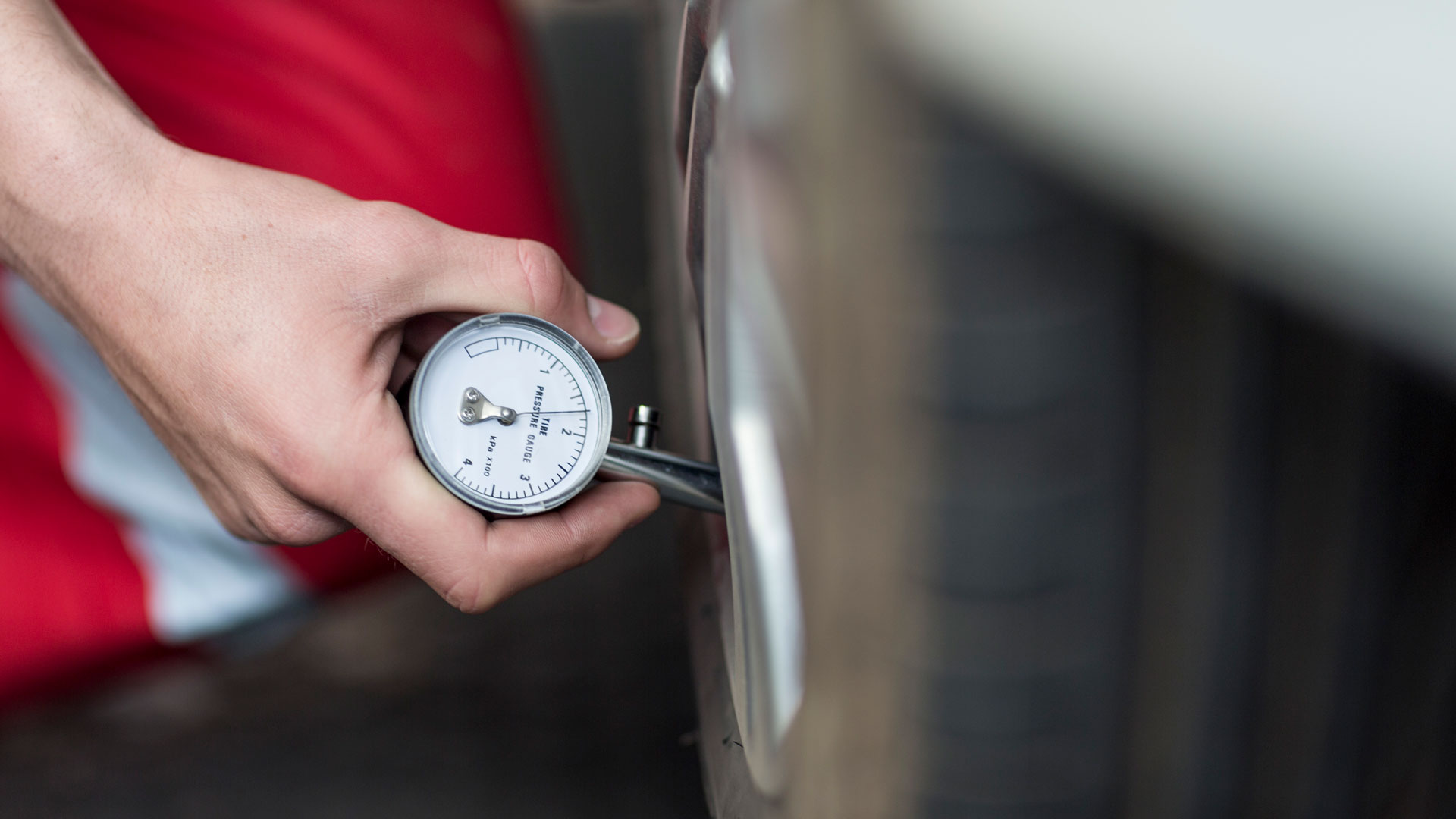
- Check your actual tire pressure, ideally with a gauge, rather than guessing based on how the tires look. Tires can appear normal while still being significantly underinflated.
- Compare it to the recommended PSI, found on the sticker inside your driver's door frame, not the number printed on the tire itself (that's the maximum, not the recommended).
- Top up all four tires to the correct pressure if they're low. This is often enough to resolve the light on its own.
- Watch the light after topping up. If it comes back on within a few days, or one tire keeps losing pressure faster than the others, that's a sign of a possible slow leak worth having checked, rather than a temperature issue.
Why This Matters More in Lethbridge
Southern Alberta's temperature swings can be sharper than other parts of the country, a Chinook can bring a 15 to 20 degree jump in a single day, then drop right back down. That kind of swing means your tire pressure can shift noticeably within the same week, and the TPMS light may come and go along with it. Checking pressure a few times through the winter, rather than just once when the light first appears, keeps you ahead of it.
Get Your Tire Pressure Checked in Lethbridge
If your TPMS light is on and you'd rather have it looked at properly than guess, Mo-Tires can check all four tires, top them up to the correct pressure, and let you know if anything looks like more than a seasonal drop.
Seeing the light and not sure if it's serious? Bring it in and we'll check it in a few minutes.